

The Michael J. Fox Foundation is advancing biochemical biomarkers, imaging biomarkers and clinical outcome assessments to improve Parkinson’s disease diagnosis.
Why Measurement Matters
Measurement tools are critical to understanding Parkinson’s disease (PD) and improving treatment. They help to better define how the underlying biology of the disease varies from person to person and support targeted, more-informative trials. By doing so, they can provide the foundation needed to advance early detection and precision medicine in PD, build therapies toward regulatory acceptance and ultimately ensure that treatments are available to address patients’ distinct needs at every stage of the disease.
A growing array of measurement tools are being studied for their potential to assess signs of Parkinson’s in people living with or at-risk for the disease. These include laboratory and imaging tests to measure misfolded alpha-synuclein and other biology underpinning the disease, clinical assessments like questionnaires to track changes in symptoms and wearable digital health technology, like smartwatches.
No single measurement tool is expected to be used for every research or clinical need. Rather, measurement tools are developed and tested for specific purposes. For example, one tool may help identify the most appropriate participants for a specific clinical trial, while another may measure a patient’s biological response to the treatment being evaluated during that trial.
The goal: Establish a suite of tools that collectively enables researchers and clinicians to:
- Determine whether a disease or condition is present and identify people who are eligible for a clinical trial.
- Provide information about how disease may progress which can help researchers group participants based on likely disease course.
- Stratify individuals based on how likely they are to benefit from or respond to an intervention.
- Track a change in the severity of a disease or signal treatment toxicity.
- Signal efficacy and safety by showing a desired biological response to an intervention.
- Determine whether a treatment is making meaningful impact on how an individual feels and functions and whether a clinical trial has met its endpoint goals.
Our Integrated Measurement Strategy
MJFF’s measurement strategy focuses on three complementary pillars: biochemical biomarkers that measure molecules in body fluids or tissue; imaging biomarkers that visualize the disease biology in the brain; and clinical outcome assessments, including wearable digital health tools, that evaluate how people feel, function and respond to treatment.
Biomarkers and clinical outcome assessments go hand in hand. When a biological change measured through a biochemical or imaging biomarker correlates with a clinical outcome, it provides insight into the disease. Likewise, linking a clinical outcome to a corresponding biomarker change can deepen our understanding of disease progression.
Biochemical Biomarkers
Biochemical biomarkers are measurable molecules, like proteins or lipids, that allow researchers and clinicians to track a specific health status. As an example, cholesterol is a biomarker for heart disease and stroke, and it can be monitored to see how well a statin medication is working to lower overall cholesterol levels.
In Parkinson’s, one key biochemical biomarker is misfolded alpha-synuclein protein. A biological hallmark of PD, these misfolded proteins are linked to processes believed to be toxic to dopamine-making neurons, and the loss of these neurons leads to Parkinson’s primary symptoms. Introduced in 2023 following MJFF-led validation studies, the alpha-synuclein seeding amplification assay (aSyn-SAA) offers one of the first well-validated methods for detecting these misfolded proteins in living people, even before symptoms arise.
Recognizing the immense value of aSyn-SAA, MJFF has a robust funding stream to support projects that expand its capabilities. Efforts focus on making aSyn-SAA more accessible by adapting it for samples like blood, urine or tissue that are less invasive than spinal fluid. Other programs aim to optimize the assay to not only detect aSyn but also measure how much is present, which could make the test more meaningful.
MJFF also supports biomarker research on other biological pathways linked to PD, including neuroinflammation, lysosomal dysfunction and mitochondrial impairment. The goal is to develop sensitive measures to detect and quantify changes in these pathways.
Here’s more information about key molecular profiling and biomarker discovery initiatives at MJFF:
- Tracking Parkinson’s over time: MJFF’s international Parkinson’s Precision Medicine Initiative (PPMI) study follows thousands of individuals with a connection to Parkinson’s to identify biological markers of PD — and we then work with a global network of cohorts to better understand these biomarkers.
- Providing samples for research: Through MJFF’s biospecimen resources, research teams can access biospecimens from PPMI and other MJFF-supported studies to investigate and validate potential PD biomarkers.
- Combining data across studies: MJFF partners with the NIH’s Accelerating Medicines Partnership Parkinson’s Disease and Related Disorders (AMP PDRD) program and the Global Neurodegeneration Proteomics Consortium, among others, to harmonize data from diverse natural history studies and clinical trials, accelerating the discovery and validation of new PD biomarkers.
Imaging Biomarkers
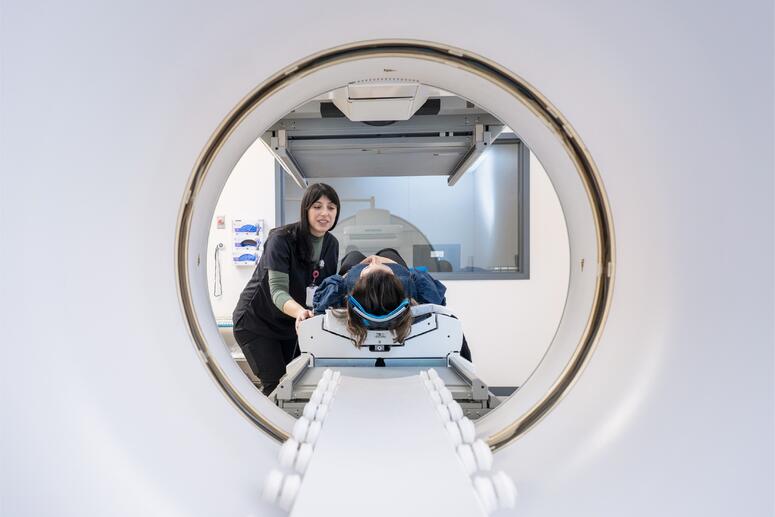
Imaging changes in the brain associated with PD — like clumps of alpha-synuclein or the loss of dopamine-producing cells — is another active research effort. Such imaging biomarkers can accelerate clinical research by providing scientists with a noninvasive way to directly visualize the pathology of PD, measure how extensive it is and determine how it responds to treatment. Imaging approaches often complement biochemical tests, helping to build a clearer picture of the biological changes underlying disease.
DaTscan is an imaging test that detects the loss of dopamine-producing cells in the brain. While it is approved to support the diagnosis of Parkinson’s, it cannot be used as a standalone diagnostic for PD because other conditions also cause dopamine cell loss and produce similar abnormal DaTscan images. Efforts are ongoing to advance DaTscan for use diagnosing Parkinson’s and tracking changes in the disease.
Researchers are also developing PET tracers designed to detect misfolded alpha-synuclein. Because alpha-synuclein accumulation happens before the loss of dopamine-producing cells, these tracers could help detect Parkinson’s earlier and evaluate treatments that target alpha-synuclein. Additional PET tracers are being developed to measure PD-linked inflammation, changes in nerve connections and dopamine degeneration.
MJFF supports this work through:
- Developing PET tracers: The MJFF Imaging Consortium brings together industry and academic teams to advance radiotracers for PD.
- Improving MRI approaches: The Molecular MRI Biomarker Program supports projects that apply molecular MRI techniques to visualize molecular and cellular events in PD.
- Specialized imaging: MJFF funds investigations into imaging systems that produce clear, detailed images of even within the smallest, hardest to reach parts of the brain.
Clinical Outcome Assessments
Clinical outcome assessments (COAs) measure how patients feel and function and are often used to define clinical trial endpoints — measurable events or outcomes used to determine whether a treatment provides a benefit. Examples of COAs in Parkinson’s disease include a clinician observing how quickly a patient can tap their fingers, walk or stand from a chair, or a patient keeping a log of “on” and “off” time. (Biomarkers can also serve as clinical trial endpoints when they are shown to reliably substitute for a direct measure of a clinical benefit, known as a surrogate endpoint. However, because current Parkinson’s biomarkers have not yet garnered sufficient data to support their use as clinical trial endpoints, COAs remain the primary tools for evaluating treatment efficacy in clinical studies.)
Aligning the Parkinson’s community, researchers and regulators on what constitutes a meaningful treatment “benefit” or endpoint can improve clinical trial design. MJFF’s Clinical Trial Endpoints Initiative, with assistance from the PD community, incorporates the experiences and perspectives of people living with PD to help ensure that trial endpoints reflect important symptoms and their impacts. The initiative also fosters alignment among researchers, regulators, industry and advocacy groups to drive adoption of improved endpoints and speed up therapeutic development.
MJFF is also focused on optimizing existing COAs based on input from the PD community. Funding priorities include:
- Assessments for early clinical stages of PD.
- Tools that measure changes in PD-related cognitive impairment over time and in response to treatment.
- Improved assessments for freezing of gait.
- Digital health technology-enabled measures to better assess gait and sleep.
Call to Collaborate
If you have questions about our biomarker funding programs or are interested in contributing, please email us at [email protected].
Sign up for emails on the latest funding news and learn about our collaborative research opportunities. Email [email protected] with questions.
Available Resources: