


Steve Yellen completes an obstacle course
I was diagnosed with Parkinson’s in 2019 at 55 years old, after my wife noticed a tremor in my left hand. For a time, I carried on without focusing directly on the disease. I thought that meant I was handling it, but in reality, I was mostly adapting day to day and hoping things wouldn’t change too quickly.
Over time, I came to see that reacting wasn’t neutral—it was limiting. Small changes accumulated, and it became clear that I was allowing Parkinson’s to gain ground. That realization marked a clear turning point. I shifted from a passive mindset to an active one and defined a clear objective: to live my best life while doing everything possible to slow progression until Parkinson’s no longer impacted me at all. That goal reshaped how I made decisions, how I measured progress and how I approached each day.
Exercise became my starting point. As I learned more, I adopted a structured approach that combined aerobic activity, strength training, balance and flexibility. Having a clear framework made the idea that “exercise is important” practical rather than abstract. I built a routine, introduced variety and set goals that helped me stay consistent over time.
That goal-oriented approach led me to athletic events. Over the past three years, I’ve completed seven triathlons and eleven Spartan obstacle course races, and raced up the Empire State Building stairs three times. These events were never about competition. They served as checkpoints—ways to stay engaged, measure progress and maintain motivation. Training for them helped turn exercise from a recommendation into a sustained habit.
From there, I began thinking more holistically about wellness. Learning about nutrition, sleep, stress management and recovery reinforced that while none of these factors offer a cure, together they can tilt the playing field in my favor. I became more intentional about daily habits, including nutrition and low-toxicity living. The goal wasn’t perfection—it was consistency over time.
Advocacy followed naturally. Through the Michael J. Fox Foundation Policy Network, I became involved in efforts supporting the National Plan to End Parkinson’s Act. I met with staff from seven U.S. Senators’ offices, and three ultimately committed to supporting the legislation. Those conversations reinforced how lived experience, shared clearly and persistently, can influence policy.
At the same time, I became more engaged in research. Using the Fox Trial Finder, I identified studies aligned with my interests and eligibility, leading me to participate in multiple research efforts. Through that involvement, I gained a deeper appreciation for just how dependent scientific progress is on people with Parkinson’s choosing to take part. Research provided both purpose and perspective, and it led me to become a research advocate—helping ensure patient experiences inform studies shaping future treatments.
Looking back, I see that I wasn’t simply adapting to Parkinson’s anymore; I was building a framework for living with it. That insight led me to write a book, Living Parkinson’s, and create livingparkinsons.com as a place to organize insights, resources and lessons learned. The focus is on practical strategies, grounded in lived experience and supported by science, that people can adapt to their own lives.
Parkinson’s has changed my life, but it hasn’t taken away my ability to influence how I live it. Choosing to stay engaged—through exercise, learning, advocacy and research—has helped me move from reacting to making deliberate choices. Parkinson’s altered my path, but it hasn’t defined its direction. If sharing what I’ve learned helps someone else take a more active role in their own journey, then it’s been worth the effort.
To learn more about Steve and his newly published book, visit his website here.
Editor’s Note: Learn more about the critical role you can play in research and the Foundation’s landmark research study, PPMI, here.
Public policy and advocacy are critical pieces to solving the Parkinson’s puzzle. By sharing your story, you can help policymakers understand what matters to people with Parkinson’s and shape policies and programs that affect the entire community. Learn more and join the Foundation’s policy network here.
Check out The Michael J. Fox Foundation’s resources for people newly diagnosed here. Additionally, check out the Foundation’s easy-to-read, downloadable guides, where movement disorders neurologist Rachel Dolhun, MD, and other experts provide practical tips and real-world advice for navigating life with Parkinson’s disease.
Photo Gallery
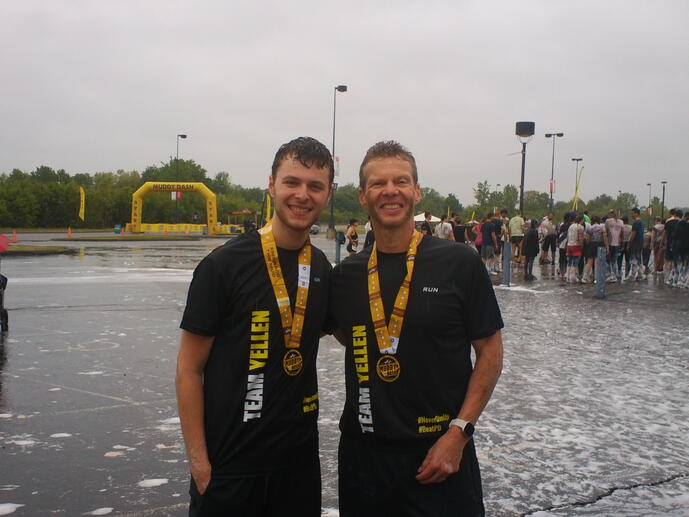
Steve Yellen at a mud run with his son, Matt.
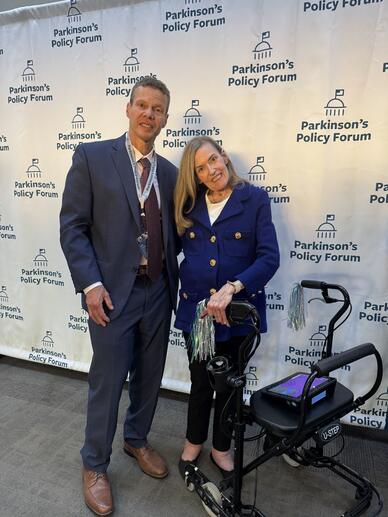
Steve Yellen at the Parkinson’s Policy Forum with U.S. Representative Jennifer Wexton.

Steve Yellen at an obstacle course race with family.