

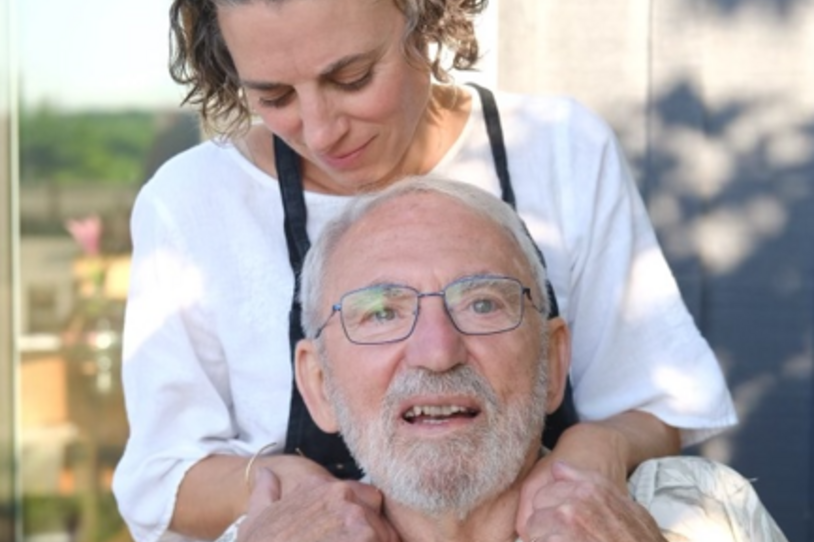
Aimie Vallat and her father, Gary Vallat
My father Gary was diagnosed with Parkinson’s in 2008. Disease doesn’t happen to just one person in a family—it happens to everyone. As a family we made a collective decision to lean in and explore what the disease would ask of us. This meant showing up, listening, and finding a new rhythm together. Over the past 18 years of Gary’s illness, I’ve learned to move between resistance and acceptance, practicing how to live, love, and let go. But most of all, I’ve learned how to navigate the path of anticipatory grief.
Grieving someone who is still alive asks us to live inside contradiction—learning to sit with the unknown and to search for meaning within unexpected loss. In the early years after my father’s diagnosis, this weight pressed heavily on me. Our lives were suddenly filtered through what was disappearing in him, and what was becoming harder to reach. I felt these shifts like a lead weight, pulling me into a sadness that was unfamiliar and uncomfortable.
I recognized early on that coping would require turning toward what I knew best—storytelling. In 2015, I made my first short documentary with Gary. Present Moment was my attempt to begin a difficult but necessary conversation about how Parkinson’s was shaping his life—and mine. The film screened at MJFF online that year and went on to film festivals and events around the world. Ten years later, in 2025, I made a second film, Surrender | A State of Being. This work offered a more tender reflection on long-term illness and the quiet reckoning of facing one’s own end of life. It revealed our collective grief and the ways it can define and shape us.
Making these films with my father gave us a shared language to explore the dimensions of our shared loss. It created a space to hold the complexity of his decline and the gradual reshaping of our family structure. Through this process, I found several things that helped me navigate anticipatory grief.
First, I learned to hold my feelings with kindness and compassion. I stopped judging myself for them and instead acknowledged that they were part of my process. The more I tried to push grief away, the more it returned. When I allowed myself to observe these feelings without resistance, clarity emerged. I began to understand that I was not only composed of grief. I carried grief, yes—but I also carried joy, wonder, and moments of deep aliveness. In fact, those joys became more accessible, more vivid, when I stopped denying the sorrow.
I also came to understand the power of grieving in community. When I shared my own story, others felt able to offer their sorrows in return. In choosing vulnerability, we grant one another the rare gift of being seen and feeling heard. Within that mutual recognition, something healing emerges. For me, making art also became a transformative through line—a way to give shape to what lived in my heart, to love my own life more fully, to love my father where he was, and, at last, to learn how to let him go.
I know I’m not alone in this complicated terrain of anticipatory grief. Each of us, at some point, will learn to walk the path of sorrow. We will carry that stone in our pocket, rubbing against the duality of pain and love, searching for meaning inside the ache. I feel a deep connection to all those traveling alongside me, holding their own delicate balance of loving, living, and dying. When we turn toward this place together—with tenderness and honesty—we give ourselves permission to acknowledge grief, and in doing so, we welcome the parts of ourselves that feel more connected, more alive, and more open to the shared joys of the world.
To watch Aimie’s latest film, Surrender | A State of Being click here.
To learn more about her films, visit Aimie’s website here.
Editor’s note: Life with Parkinson’s disease (PD) comes with a vast range of emotions, wherever you are in your disease journey. In a recent special edition podcast from The Michael J. Fox Foundation, a panel of experts have a frank and deep conversation about how they’ve navigated their feelings over the years, how they’ve managed challenging emotions and what lifts them up and gives them hope.
The Parkinson’s journey can feel isolating at times, both for those living with PD and their loved ones. Access the Parkinson’s Buddy Network, an online community of people impacted by Parkinson’s, that was designed to help individuals and families make meaningful connections, engage in important dialogue, find useful resources and build long-lasting relationships.
Photo Gallery
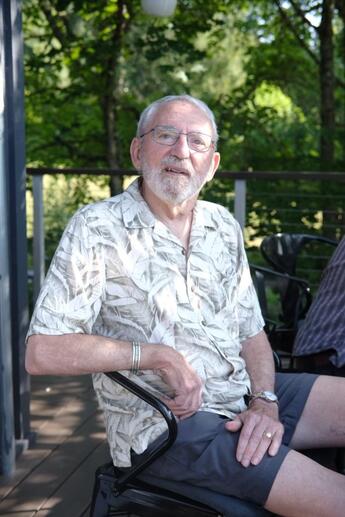
Aimie’s father, Gary
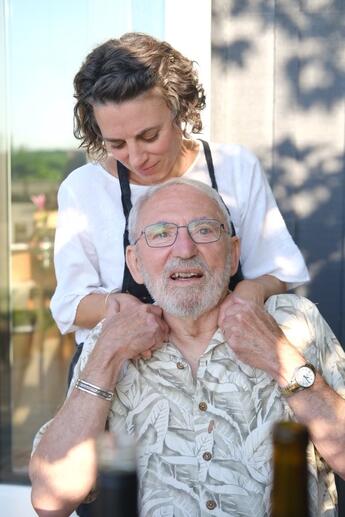
Aimie Vallat, and her father, Gary Vallat
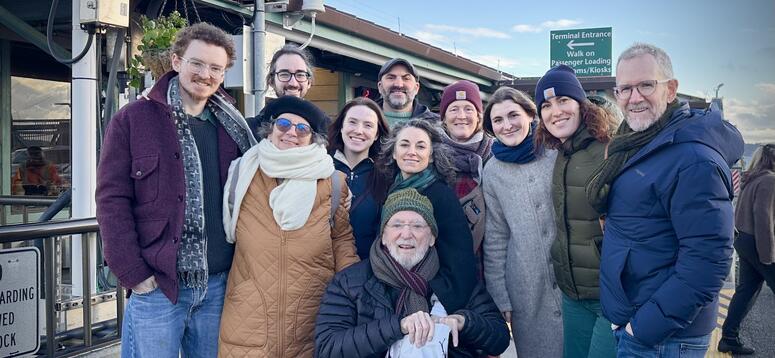
Vallat and Phillips family